Carbon fiber or any composite products are widely used in modern production. The coating application is a challenge on such material since its a bit different from any traditional material. Following we’ll provide a guidance based our existing experience over a variety carbon fiber products.
Coating Selection
The coating process needs to be designed based on the operating environment and the surface characteristics of the carbon fiber. Vehicles encounter harsh environments during operation, including sand and gravel impact, solar radiation, alternating hot and cold temperatures, and acid rain corrosion. Therefore, this paper selects epoxy-based carbon fiber reinforced composite materials.
The primer is the first coating layer that directly contacts the carbon fiber substrate. Because carbon fiber materials are sensitive to water, their strength decreases significantly after absorbing water. Therefore, the primer should be highly dense, able to prevent water penetration, and have excellent adhesion, such as epoxy primer. Using a transparent primer specifically designed for carbon fiber can properly seal substrate defects and improve the fullness, isolation, and durability of the overall coating.
Because the carbon fiber substrate surface is porous, applying a primer does not completely cover the surface pores. Therefore, a putty with good compatibility and filling properties with the primer and intermediate coat is selected to fill the pores on the substrate surface.
As the final coating layer in the coating system, the topcoat is a protective layer that prevents the aging of the composite material. It needs to have good UV resistance, acid and alkali resistance, and weather resistance, and be able to withstand various harsh weather conditions. Polyurethane paints are generally used.
In summary, the carbon fiber coating system is: two-component epoxy primer + unsaturated elastic polyester putty + two-component polyurethane intermediate coat + two-component polyurethane topcoat.
Coating Process
1- Surface Treatment
Common surface treatment processes include sandblasting, grinding, plasma treatment, and dry ice treatment. The aluminum alloy car body undergoes full-body sandblasting (brown corundum abrasive, particle size specification F46). After sandblasting, the average surface roughness Ra of the car body surface is measured with a TR200 surface roughness meter, requiring 5 μm ≤ Ra ≤ 12.5 μm. The main purpose of sandblasting the car body is to ensure good adhesion between the coating and the car body substrate.
The main purpose of surface treatment of the carbon fiber substrate is to ensure the cleanliness of the substrate surface, adjust the surface roughness, and improve the surface activity of the carbon fiber.
Due to the characteristics of the carbon fiber molding process itself, its surface is prone to appearance defects. If the same sandblasting treatment used for aluminum alloy car bodies is applied, the surface will easily show noticeable streaks, grooves, and pits.
Therefore, sandblasting cannot be used for the surface treatment of carbon fiber materials. Typically, the surface is first wiped with isopropanol, then mechanically polished with P240 sandpaper, and finally wiped again with isopropanol and air-dried.
Polishing removes defects such as particles, pinholes, pits, and streaks from the previous process, resulting in a highly roughened surface, which increases the contact area for the coating and creates a “keying effect.” Before spraying, the surface must be clean (free of dirt, dust, oil, and grease) and dry.
2- Application Process
The application of transparent putty to carbon fiber differs from that of aluminum alloy. After polishing the carbon fiber substrate with P240 sandpaper, apply the transparent putty, let it stand for 2 hours, then polish again. It is recommended to let it stand for 4 hours after polishing for sufficient filling. The transparent putty layer should not be too thick, otherwise, it will increase the risk of adhesion problems. After the transparent putty dries, polish it with P400 sandpaper, then spray the transparent high-gloss clear coat, applying two coats wet-on-wet without intermediate flash drying.
Since the transparent system does not meet the aesthetic requirements for the exterior surface of the car body, the carbon fiber coating system is composed of “water-based epoxy primer + eco friendly polyester putty + water-based polyurethane intermediate coat + water-based polyurethane topcoat” similar to the coating system for conventional aluminum profiles. The carbon fiber substrate is polished with P240 sandpaper, then two coats of epoxy primer are applied wet-on-wet. After the primer cures, it is polished with P600 sandpaper.
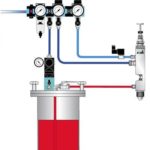
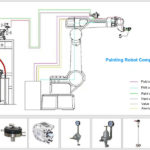
Putty is applied according to the surface condition after polishing. After the putty dries, it is polished with P600 sandpaper, and then a second coat is applied. Note that the putty thickness should not exceed 1 mm. The primer is applied using a high-pressure airless spray machine with a pump ratio of 40:1 and an air pressure of 0.6 MPa. The intermediate and topcoats are applied using a diaphragm pump with an air pressure of 0.6 MPa.