Electrostatic TurboBell or TurboDISK?

Electrostatic TurboBell or TurboDISK?

Tutorial
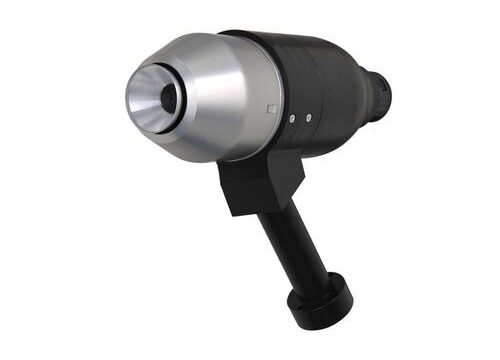
Electrostatic spray painting is a leading technology for its extremely high grade paint atomization and application efficiency. Except the traditional electrostatic spray gun, there're also popular options called electrostatic turbobell and turbodisk. They both are widely installed from various spray systems but the applications are quite different. Following we'll compare the two options from different sides for quick illustration. Comparison of Structure and Operating Principles ITEM Electrostatic TurboBell Electrostatic TurboDISK ‌Structure‌ A bell-shaped metal structure with a sharp rim, featuring a deep, conical cavity. A disc-like structure—flat and extended—resembling a rapidly rotating disk. ‌Paint Supply Method The coating material is injected from the center, flows along the inner wall to the rim of the cup, and is flung outward by centrifugal force. The coating material is injected from the center…
Read More

Conductive Paint Application Guidance

Tutorial
Conductive paint is a functional coating material composed of a base resin, conductive fillers (such as metal particles or graphite), solvents, and additives. Conductive coatings are generally categorized into two types: anti-static paint and truly conductive paint. The former serves a dual function - providing both corrosion protection and anti-static properties and is typically applied to equipment such as storage tanks. The latter possesses a higher electrical conductivity (surface resistivity ≤ 0.025–0.25 Ω/cm²) and is utilized for electromagnetic shielding and the corrosion protection of underground power grids. Conductive paints are formulated as single-component coatings using metal fillers such as silver, copper, or nickel, and can be spray-applied to the surfaces of metal or plastic substrates. Representative products—such as TF-801 (silver-copper based) and TF-606 (nickel-based)—are well-suited for the processing of plastics…
Read More

UV Intelligent Power Supply vs Traditional Transformer

Tutorial
UV intelligent power supplies exhibit significant generational differences compared to traditional power supplies in industrial applications. These differences are primarily manifested across four key dimensions—energy efficiency, control precision, response speed, and level of intelligence—in all of which they comprehensively outperform traditional transformer-based power supplies. Consequently, they are particularly well-suited for scenarios with stringent requirements for process stability and cost control, such as automated spray coating lines. Core Performance Comparison ITEM Transformer + Capacitor UV Intelligent Power(High-Frequency Variable Frequency + Intelligent Control) ‌Energy conversion efficiency‌ 75%–80% ‌92%–96%‌ ‌Power Regulation Method‌ Fixed Three-Speed(Ex. 50% /75% /100%) ‌10%–100% Stepless Dimming ‌Startup Response Time‌ 1–3s ‌≤8ms‌ ‌Standby Power Consumption‌ Minimum 50% of rated power ‌Can be reduced to 10%‌ ‌Impact on Lamp Lifespan Frequent high-voltage surges lead to a shortened service life. Soft Start…
Read More

Consistent Coating Thickness By Automated Spray

Tutorial
Ensuring consistent coating thickness in automated spray painting hinges on the synergistic management of equipment automation, closed-loop control of process parameters, and real-time monitoring. Particularly in high-volume production environments, stability and repeatability constitute the core objectives. Precise Control of Automated Spraying Systems Robot Path Programming: Through teach-in programming or offline simulation, the system ensures highly repeatable spray gun trajectories, guaranteeing complete coverage of the target area without omissions or excessive overlap—a capability particularly well-suited for workpieces with complex curved surfaces. Constant Spraying Distance: Utilizing laser rangefinders or vision-guided systems, the robotic arm's posture is automatically adjusted to consistently maintain a distance of 15–25 cm between the spray gun and the workpiece surface. Uniform Movement Control: The robot moves at a constant speed of 30–60 cm/s, thereby eliminating the speed fluctuations…
Read More
UV Mercury Lamp and LED lamp Comparison in Coating Industry

UV Mercury Lamp and LED lamp Comparison in Coating Industry

Tutorial
In the coating industry, UV mercury lamp and UV LED lamp are two mainstream ultraviolet curing light sources, and they have significant differences in technical principles, performance, and application adaptability. Based on the latest publicly available information (2026), the main differences are as follows: Core Differences Comparison Types of light sources and principles of luminescence UV mercury lamp: Ultraviolet light is generated by high-pressure mercury vapor discharge, and the spectrum is continuously distributed in a wide band (200–450 nm), including UV-A, UV-B and partial infrared thermal radiation. Its luminescence mechanism relies on arc excitation, and there is a waste of energy in the non-target band. UV LED lamp: based on semiconductor PN junction light, emitting narrow wavelength ultraviolet light, common peak wavelengths are 365 nm, 385 nm, 395 nm or…
Read More

Chain Conveyor Troubleshooting for Automatic Loading System

Tutorial
We have developped an automatic loading machine for vacuum metallization painting line system considerring its great improvement to reduce labor works. When it's well programmed and everything well tested for live production, suddenly some day we found the automatic loader can not put objects properly to chain spindle. After inspection on each unit carefully we finally found its due to the chain pitch elongated during operation. Technically speaking, the painting line system is a high precision setup which should be always accurate in mechanical structure. Among all the components, conveyor chain is the most crutial part as it will carry all spindles and products to pass through various treatment stations. Elongated chains in painting lines will directly trigger a series of cascading failures in terms of machinery, processes, and safety.…
Read More
Spray Parameter Control in High-temperature and High-humidity Environment

Spray Parameter Control in High-temperature and High-humidity Environment

Tutorial
How to control the quality of product surface painting by controlling spraying parameters in a high-temperature and high-humidity coating environment? Painting in a high-temperature and high-humidity environment is a severe challenge. Excessive humidity can cause the paint film to "whiten" (due to water vapor condensation), while excessive temperature can easily cause "dry spraying," "orange peel," or "sagging." To stably produce products with both acceptable performance and appearance, it is necessary to systematically adjust the spray gun parameters and film thickness control, supplemented by other key measures. The following is a detailed introduction on how to make systematic adjustments and related measures: I. Spray Gun Parameter Adjustment Strategy (1) Appropriately increase the atomizing air pressure (e.g., increase by 5-10%) Principle: Enhances the atomization effect, making the paint particles finer, which helps…
Read More

Excimer UV Technology Comprehensive Analysis

Tutorial
Do you want "true ultra-matte finish, strong scratch resistance, fingerprint resistance, and low migration," but are constantly struggling with adding excessive additives to your formulations and facing polymerization inhibition issues on the production line? The 308nm XeCl excimer light source offers a third path: using narrow-spectrum short-wave light and high photon energy to precisely excite initiators and "sculpt" the surface morphology, achieving a highly cross-linked surface layer and controllable matte finish without increasing thermal load. When used in combination with LED/mercury lamps, it can also simultaneously address deep curing and low migration. This article systematically provides practical parameters and a checklist of potential pitfalls, covering everything from formulation, principles, and processes to typical applications in wood coatings, inks, adhesives, and optical fibers/lithography, helping you transform "can be done" and "done…
Read More

Composite Carbon Fiber Coating Application Guidance

Tutorial
Carbon fiber or any composite products are widely used in modern production. The coating application is a challenge on such material since its a bit different from any traditional material. Following we'll provide a guidance based our existing experience over a variety carbon fiber products. Coating Selection The coating process needs to be designed based on the operating environment and the surface characteristics of the carbon fiber. Vehicles encounter harsh environments during operation, including sand and gravel impact, solar radiation, alternating hot and cold temperatures, and acid rain corrosion. Therefore, this paper selects epoxy-based carbon fiber reinforced composite materials. The primer is the first coating layer that directly contacts the carbon fiber substrate. Because carbon fiber materials are sensitive to water, their strength decreases significantly after absorbing water. Therefore, the…
Read More

Anti-fingerprint Stainless Steel Technology

Tutorial
Anti-fingerprint stainless steel technology is an advanced surface treatment technology that uses surface modification techniques to form a transparent, oleophobic, hydrophobic, and stain-resistant protective layer on the stainless steel substrate. This significantly reduces fingerprint and oil stain adhesion and improves ease of cleaning. This process does not alter the mechanical properties of the stainless steel itself, but greatly optimizes its appearance, durability and user experience. Core Process Technology Systems Nano coating Technology Using organosilicon, fluoride, or nanoceramic solutions, a transparent film layer with a thickness of only tens to hundreds of nanometers is formed on the stainless steel surface through spraying, dip coating, or immersion. This film layer reduces surface energy, preventing fingerprint oils from spreading, achieving a "wipe-clean" effect. Its advantages include simple construction and low cost, making it…
Read More