Anti-fingerprint stainless steel technology is an advanced surface treatment technology that uses surface modification techniques to form a transparent, oleophobic, hydrophobic, and stain-resistant protective layer on the stainless steel substrate. This significantly reduces fingerprint and oil stain adhesion and improves ease of cleaning. This process does not alter the mechanical properties of the stainless steel itself, but greatly optimizes its appearance, durability and user experience.
Core Process Technology Systems
Nano coating Technology
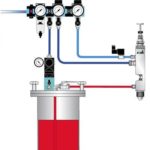
Using organosilicon, fluoride, or nanoceramic solutions, a transparent film layer with a thickness of only tens to hundreds of nanometers is formed on the stainless steel surface through spraying, dip coating, or immersion. This film layer reduces surface energy, preventing fingerprint oils from spreading, achieving a “wipe-clean” effect. Its advantages include simple construction and low cost, making it suitable for mass production of home appliances and consumer electronics components.
PVD Vacuum Coating Process
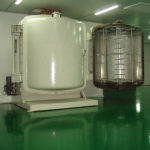
Physical vapor deposition (PVD) ionizes metal targets such as titanium and chromium in a high vacuum environment and deposits them on the stainless steel surface to form a nanometer-scale metal-ceramic coating (such as black titanium, champagne gold), followed by a layer of anti-fingerprint sealant. This process combines color decoration with high hardness (up to 2000HV or more) and excellent wear resistance, and is widely used in high-end elevator panels, mobile phone frames, and luxury metal parts.
Fluorocarbon Coating System
Using special coatings containing fluorocarbon resins as the core, a multi-layer protection system is constructed through a five-step process: degreasing → sandblasting (Sa2.5 grade) → epoxy primer → fluorocarbon topcoat → high-temperature curing. The fluorocarbon bond (C-F) gives the coating super weather resistance, chemical corrosion resistance, and self-cleaning ability, making it suitable for harsh environments such as building curtain walls and outdoor public facilities.
ALD Atomic Layer Deposition (Cutting-edge Technology)
Atomic layer deposition (ALD) achieves uniform coating deposition with sub-nanometer (0.1–0.3nm) precision by alternately introducing precursor gases, especially suitable for full coverage treatment of complex three-dimensional structures (such as microchannels and precision parts). Although costly, it has irreplaceable advantages in high-precision fields such as semiconductor equipment and medical devices.
Application Area and Typical Products
| Application | Products | Surface Technology | Material Property |
| Homeware panels | Refrigerator door panels, oven casings | Nanocoating, PVD coating | 304 stainless steel, thickness 0.5–1.2mm |
| Elevator interiors | Elevator panels, call buttons | Mirror-polished and brushed + PVD titanium coating, anti-fingerprint treatment. | 1.0–2.0 mm, custom sizes available |
| Architectural decoration | Curtain walls, ceilings, handrails | Fluorocarbon coating, sandblasting + nano coating | 316 stainless steel, thickness 1.5–3.0 mm |
| Display cabinets | Jewelry display cases, food display stands | Brushed matte finish + anti-fingerprint screen protector | 201/304 grade, available for custom cutting. |
| Electronic products | Mobile phone bezels, smart lock casings | PVD vacuum + anti-fingerprint coating | Ultra-thin sheet material, with a precision of ±0.05mm. |
Process Comparison and Visual Experience
- Microstructure: PVD coatings exhibit a dense crystalline structure, while nano-coatings form a mesh-like hydrophobic microstructure. Both are significantly different from the smooth surface of untreated stainless steel.
- Fingerprint Test: Brushed stainless steel treated with nano-coating shows oil stains as small dots that do not spread after finger pressure, while ordinary stainless steel forms large areas of stains.
- Real-world Application: Vacuum-plated black titanium elevator panels and fluorocarbon-coated building curtain walls maintain stable color under long-term exposure to sunlight and rain, without powdering or fading.
Construction and Maintenance Key Points
- Pre-treatment is crucial: Regardless of the process used, the substrate must be thoroughly degreased and the oxide film removed (sandblasted to Sa2.5 level), otherwise the coating adhesion will be significantly reduced.
- Curing Conditions: Nano-coatings are mostly self-drying, fluorocarbon coatings require baking at 80–120℃ for curing, and PVD must be completed in a vacuum chamber.
- Daily Cleaning: It is recommended to use a neutral detergent and a soft cloth for cleaning, avoiding strong acids, strong alkalis, or steel wool scrubbing to extend the coating life.
Industry Status and Lack of Standards
Currently, there are no national mandatory standards (GB/ISO) for anti-fingerprint stainless steel processes. Performance evaluation mainly relies on company-specific standards, such as fingerprint resistance testing (ASTM D3359), wear resistance cycles (≥100,000 touches), and salt spray resistance (≥500 hours).