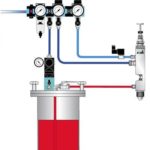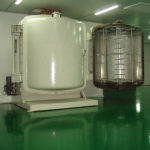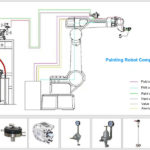
Due to its obvious advantages such as low price, light weight and good flexibility, the proportion of plastic components used in automobiles has increased greatly. The coating of automotive exterior plastic parts has higher and higher requirements in appearance and performance. Plastic parts have their own characteristics, small surface polarity and poor adhesion to the coating. How to do a good job in the pre-treatment of plastic coating is the key to the entire plastic coating.
Degreasing
1.1 Overview of degreasing
Automobile plastic parts are basically injection molded, a layer of release agent is applied in the injection mold. The release agent is generally a fatty acid grease, which will partially remain on the plastic surface. Degreasing of plastic parts is to remove the release agent and dust or dirt during transportation, so as to provide a good surface state for coating.
1.2 Treatment method
There are two commonly used degreasing methods: organic solvent cleaning and chemical cleaning. Organic solvents can be isopropyl alcohol or alcohol, which are less harmful to the environment and human body. There are also benzene and ketone solvents for cleaning. The construction method generally adopts manual scrubbing, immersion, etc., because of its low investment and simple construction, it is common in some small-scale plastic parts coating lines. Chemical solution cleaning uses chemical degreasing liquid for treatment. The advantages are no VOC emissions and high safety. Weakness is its high equipment investment and operating costs. It is common in automatic production lines with large production capacity.
1.3 Cleaning effect
There is quality risk fo residual degreasing agent, because it will affect the performance of coating film. It needs to be rinsed with pure water to ensure that the dripping conductivity after cleaning is <20S/cm. Because the plastic surface is not hydrophilic, it is not conducive to thoroughly cleaning the plastic surface. The plastic surface adjuster is used for rinsing, which can significantly improve the plastic surface state, so that the water film can be evenly distributed on the substrate surface , which not only enhances the cleaning effect, but also improves the wettability and adhesion of the coating.
1.4 Inspection after degreasing
(1) Observe the contact angle. Drop water on the treated plastic surface and observe the contact angle. The smaller the contact angle, the better the treatment result.
(2) Use a dyne pen to test the surface tension. Generally, it is required to be above 35×10-5 N.
(3) The water immersion method is to immerse the treated plastic parts in water and take them out. Observe the continuity, integrity and destruction time of the water film for measurement.
Improve the plastic surface condition
Comparing to metal substrates, plastic has two weaknesses:
(a) The surface polarity of plastic is low and the surface tension is lower than that of metal. The wettability of the coating is poor, especially for materials with high crystallinity such as PP, PE, PBT, etc. The surface tension is usually only 30×10-5~34×10-5N (generally 40X10-5N can achieve good adhesion). If the surface is not treated, it is difficult for the coating to adhere to it;
(b) Plastic parts are insulators, which are prone to static electricity and easy to absorb fibers and dust. Different plastic materials have different dielectric constants and are prone to carry different charges. For example, PP and PE have small dielectric constants and are prone to carry negative charges, while PET and PA are prone to carry positive charges.
2.1 Improving the adhesion between the product surface and coating
For plastic substrates with low surface polarity and low surface tension such as PP, PE, and PBT, the following methods are generally used to improve them:
2.1.1 Polarization treatment of the plastic surface molecules, such as flame treatment, chromic acid solution oxidation treatment, plasma treatment, etc., is performed to make the surface molecules carry polar groups such as “-C0” and “-C00H”, which significantly enhances the surface polarity and increases the surface tension, thereby improving the spreadability of the coating.
(1) Flame treatment is to use high-temperature rich flames to treat the surface of plastic parts at high temperature, and to increase the polarity of plastic surface molecules by oxygenating, thereby increasing the surface tension. At the same time, the high-temperature oxidation flame can also play a role in destroying and decomposing the release agent and oil stains on the surface. Generally, acetylene gas is used as fuel, and the center temperature of the flame is as high as 2000~3000℃. At present, flame treatment is more common in some large-scale production lines, and robots are used for construction.
(2) Chromic acid treatment is to treat the plastic surface with a mixed solution of potassium dichromate and sulfuric acid. Because hexavalent chromium can oxidize the methyl groups on the surface of PP substrate to carboxyl groups, the effect is obvious, but PE is not suitable for this method. Due to the limitations of hexavalent chromium, it is rarely used. Potassium permanganate can be used instead of potassium dichromate for wiping or soaking.
(3) Plasma treatment is also called electrical treatment. This method mainly uses glow discharge and other methods to discharge the plastic surface. The high energy and highly reactive free radicals, ions, ultraviolet rays, etc. of plasma are used to induce oxidation, degradation, polymerization and other reactions on the plastic surface molecules, thereby introducing polar groups to enhance the adhesion of the coating to the plastic surface. This method has the outstanding characteristics of short treatment time and good effect, but the equipment investment is relatively large.
Primer treatment
ABS and PC plastics have high polarity and can be directly coated with topcoat. PS, HIPS and other plastics are sensitive to solvents, easily corroded by solvents, and have poor temperature resistance. Generally, thermoplastic acrylic paint, modified acrylic paint or nitro paint that is free from heat at room temperature should be selected, and the matching diluent should be carefully selected; for non-polar polyolefins PP and PE, it is difficult for the paint to wet and adhere to their surfaces, and they are very solvent-resistant, which is the most difficult. The more practical method is to apply a thin layer of primer (transition layer), which generally dissolves a part of vaporized olefins (CPO). Because CPO is an olefin solvent, it can well infiltrate the PP substrate due to similar solubility, so as to increase the adhesion of the paint.