Ensuring consistent coating thickness in automated spray painting hinges on the synergistic management of equipment automation, closed-loop control of process parameters, and real-time monitoring. Particularly in high-volume production environments, stability and repeatability constitute the core objectives.
Precise Control of Automated Spraying Systems
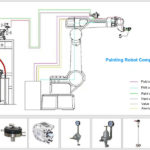
Robot Path Programming: Through teach-in programming or offline simulation, the system ensures highly repeatable spray gun trajectories, guaranteeing complete coverage of the target area without omissions or excessive overlap—a capability particularly well-suited for workpieces with complex curved surfaces.
Constant Spraying Distance: Utilizing laser rangefinders or vision-guided systems, the robotic arm’s posture is automatically adjusted to consistently maintain a distance of 15–25 cm between the spray gun and the workpiece surface.
Uniform Movement Control: The robot moves at a constant speed of 30–60 cm/s, thereby eliminating the speed fluctuations inherent in manual operations and ensuring a consistent coating volume per unit area.
Closed-Loop Adjustment of Process Parameters
Atomization Control: In rotary bell atomization systems, the rotational speed is typically set between 20,000 and 50,000 rpm; this high-speed rotation ensures uniform atomization of the coating material and minimizes particle agglomeration.
Electrostatic-Assisted Film Formation: An electrostatic voltage of 60–90 kV is applied to charge the paint particles, causing them to be uniformly attracted and deposited onto the workpiece surface under the influence of the electric field—a technique that significantly enhances coverage capabilities, particularly in difficult-to-coat areas such as edges and recesses.
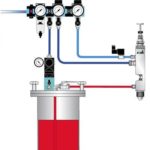
Stable Material Supply System: The system employs quantitative pumps or closed-loop supply controls to ensure a constant flow rate of the coating material, thereby preventing uneven paint output caused by pressure fluctuations.
Real-Time Monitoring and Feedback Adjustment
Inline Thickness Measurement: X-ray fluorescence (XRF) or laser thickness gauges are integrated into the post-spraying stage to provide real-time measurements of dry film thickness; this data is fed back to the control system to enable dynamic adjustments of spraying parameters.
Automatic Viscosity Control: The system is equipped with an inline viscometer to monitor coating viscosity in real time; should the viscosity deviate from the preset target range (e.g., 18–30 seconds using a Tu-4 cup), the system automatically adds a diluent to correct the viscosity.
Intelligent Environmental Control: Automatically regulates the temperature and humidity within the spray booth to 20–25°C / 40%–60% RH, preventing environmental fluctuations from affecting paint film leveling and drying rates.
Pre-treatment and Substrate Consistency Assurance
Automated Pre-treatment Line: Processes such as degreasing, phosphating, and rinsing are fully automated, ensuring consistent surface conditions for every workpiece and laying the foundation for uniform coating.
Substrate Surface Roughness Control: Through sandblasting or shot blasting, surface roughness is stabilized within the range of Ra 2.5–10 μm, thereby enhancing coating adhesion and thickness uniformity.
Optimized Multi-layer Thin-coating Process
Utilizing a “wet-on-wet” multi-pass spraying method, each pass is controlled to a thickness of 10–15 μm, followed by a 5–10 minute flash-off interval. This approach prevents issues such as sagging or “orange peel” texture often caused by single-pass thick coatings, ultimately allowing the total film thickness error to be controlled within ±5 μm.
Intelligent Closed-Loop Control: From “Experience-based Spraying” to “Data-Driven Operations”
Modern automated spraying systems have moved beyond traditional parameter-setting modes, shifting toward an intelligent control paradigm characterized by real-time sensing, dynamic adjustment, and closed-loop feedback:
Laser Scanning + Machine Vision: Through 3D point cloud modeling (with an accuracy of ±0.05 mm), the system identifies workpiece geometry in real-time and dynamically adjusts spray gun trajectories, ensuring that coating thickness variations on complex curved surfaces remain within ±3 μm.
Integrated In-line Thickness Measurement: Systems—such as those from Keyence—employ ultrasonic or X-ray fluorescence technologies to capture hundreds of thickness data points per second. This data is automatically fed back to the PLC, enabling real-time adjustments to spray flow rates, speeds, and air pressure, thereby achieving a millisecond-level response for the “detection-to-adjustment” cycle.
Edge AI Terminals (e.g., HiChatBox): Embedded AI algorithms process data locally—bypassing cloud-based latency—to automatically compensate for localized thickness deviations within 10 ms, effectively eliminating issues such as “missed spots” and “paint sagging.”