
‌Air Filter Filtration Grade Comparison‌

‌Air Filter Filtration Grade Comparison‌

Tutorial
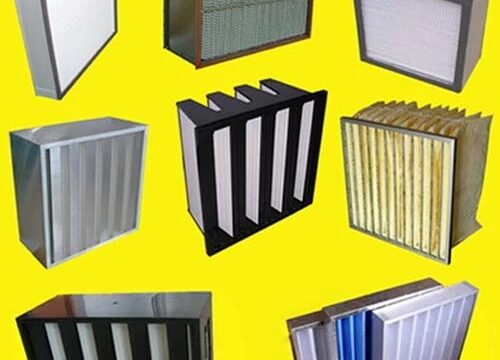
Air filter is the most important unit in clean room AHU system configuration. A proper installation of different filters will greatly improve the air cleanness whichis crucial for activities in this area. Air filters are available in multiple grades according to filtration efficiency, mainly including primary filters, medium efficiency filters, high and medium efficiency filters, sub-high efficiency filters and hepa filters. Filters of different levels differ in filtration efficiency and applicable occasions. Primary filter‌: Mainly used to filter large dust particles ≥5.0μm and various solid particles as the primary filter of the air purification system to protect the medium filter. It has a simple structure and is cheap. It is often placed at the fresh air inlet of the air conditioning equipment or after the fresh air and return air…
Read More
Electrophoresis or Powder Coating?

Electrophoresis or Powder Coating?

Tutorial
Electrophoresis and powder coating are widely solutions used for metal surface treatment. Regardless the way of application, the consideration over the two options are more awared without a professional guidance. Following we collected the pros and cons of electrophoresis and powder coating and how to choose for specific purposes. Electrophoresis: a commonly used industrial automation production process. During the electrophoresis process, metal objects are electrified and immersed in an electrophoresis tank. There is an electrolytic solid powder solution in the conductive liquid. When it moves from the anode on the metal to the cathode, the pigment moves from the anode of the metal to the cathode of the metal and combines with the cathode surface to form a shell. The products produced using electrophoresis technology have a smooth surface and…
Read More

Plastic Material Characteristics and Applications

Tutorial
Plastic Material Overview PE、PP、PVC、PS、PC、PF、EP、ABS、PA、PMMA all plastic materials (also known as polymer materials) are a type of plastic synthetic materials made from polymer compounds through different processing methods. Plastic materials are well recognized for its light weight, high strength, corrosion resistance, good insulation, etc., and are widely used in packaging, construction, automotive, electronics and other industries. Polyethylene(PE): a lightweight, flexible thermoplastic with good chemical resistance. According to the density, it can be divided into high-density polyethylene (HDPE) and low-density polyethylene (LDPE). Polypropylene (PP): relatively high heat resistance, chemical resistance and rigidity, its a common material for automotive parts and household appliances. Polyvinyl chloride (PVC): come with good chemical corrosion resistance, mechanical strength and electrical insulation, it is commonly used in pipes, wires and cables, and medical equipment. Polystyrene (PS): It is…
Read More
Neodymium Magnet Painting Solution

Neodymium Magnet Painting Solution

Tutorial
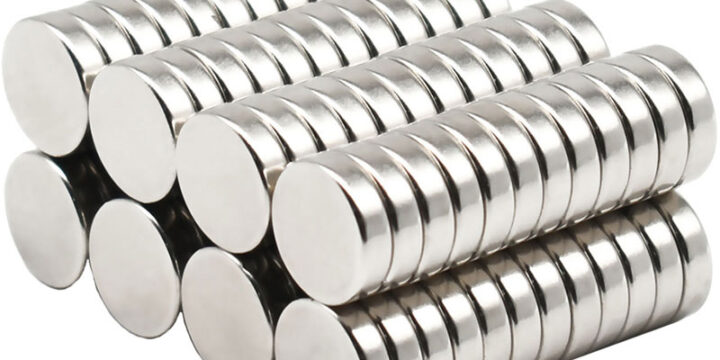
Neodymium or NdFeB is a new type of strong magnetic material, composed of neodymium, iron, boron and other elements. It is widely used in motors, generators, computers, communications, aerospace and other fields due to its high magnetic energy, high coercive force, high magnetic permeability and high stability. In order to better use the performance of NdFeB, surface painting is required. Surface painting can not only improve the magnet corrosion resistance, but also improve its oxidation resistance, thereby improving its stability and service life. Befor we start the actual painting, the magnet surface needs to be pretreated to remove surface dirt, oxide layer and impurities. The general pretreatment includes chemical degreasing, ultrasonic cleaning, electrolytic degreasing and other steps to remove surface dirt and oxide layer to achieve a certain surface roughness.…
Read More
Detailed Process of Metal Surface Treatment Solutions

Detailed Process of Metal Surface Treatment Solutions

Tutorial
Metal surface treatment process plays a crucial role in product design. It can not only enhance the appearance and functionality of products, but also realize the innovative ideas of designers and enhance the market competitiveness of products. With the development of technology, future metal surface treatment processes will bring more possibilities and innovative space for product design. Overview of Surface Treatment Processes Definition of Surface Treatment Surface treatment technology refers to a series of techniques that use physical, chemical, or mechanical means to process the surface of metal materials in order to change their surface properties. These technologies include but are not limited to cleaning, polishing, coating, heat treatment, etc., with the aim of improving the corrosion resistance, wear resistance, aesthetics, or other specific physical and chemical properties of materials…
Read More
Common Surface Treatment Solutions for Metal Parts

Common Surface Treatment Solutions for Metal Parts

Tutorial
Any metal production will need a form of surface treatment before arrived to user side. A bare metal will easily be oxidized or rusted if no proper surface treatment applied. We collected a list of common solutions for metal parts surface treatment for quick view. 1. Electroplating: Commonly used metal parts are electroplated with zinc, nickel, chromium, copper, etc., which has the functions of anti-corrosion, improving wear resistance, and enhancing aesthetics, etc. 2. Anodizing: Commonly used for aluminum alloy surface treatment, it is an essential process 3. Blackening treatment: can maintain the dimensional accuracy of parts, anti-corrosion and beautiful appearance 4. Spray painting: mainly for corrosion protection of exterior parts, such as racks, etc. 5. Polishing: Polishing refers to a processing method that uses mechanical, chemical or electrochemical effects to…
Read More
Teflon Coating & Its Family Members

Teflon Coating & Its Family Members

Tutorial
Teflon(known as Polytetrafluoroethylene or PTFE) is a polymer formed by the close combination of carbon atoms and fluorine atoms. Because of its excellent chemical stability, high temperature resistance, low coefficient of friction and excellent insulation properties, it is known as the "King of Plastics" In addition to polytetrafluoroethylene (PTFE), there are other related fluoroplastics, i.e. plastics with fluorine (F)! Including PTFE (polytetrafluoroethylene), ETFE (ethylene-tetrafluoroethylene copolymer), FEP (fluorinated ethylene propylene copolymer), PFA (perfluoroalkylate) and PVDF (polyvinylidene fluoride) are all fluoroplastics, that is, polymer materials containing fluorine atoms, which have their own characteristics in chemical structure, physical properties and applications. Below is a table list of 5 Teflon materials with its basic characteristics Performance/Materials PTFE(polytetrafluoroethylene) ETFE(Ethylene-tetrafluoroethylene copolymer) FEP(Fluorinated ethylene propylene copolymer) PFA(Perfluoroalkylated substances) PVDF(Polyvinylidene fluoride) Chemical resistance A+ A A A+ A-…
Read More
Plasma Surface Activation Treatment

Plasma Surface Activation Treatment

Tutorial
Plasma surface activation is a widely used technology in materials science and engineering, and its main role is to change the material surface properties through plasma treatment, so as to improve its adhesion, wettability, wear resistance and corrosion resistance. With the help of plasma surface treatment before spraying: remove various impurities (such as oil stains, rust, floating ash, old paint layer, etc.) adhered to the surface of the object, and give excellent substrates suitable for spraying standards to ensure that the coating has excellent corrosion resistance, decorative performance and some special effects. Thus plasma treatment on the object surface is crucial for high end spray painting. Plasma Activation Principle The plasma used in the process is a positively charged gas that contains many particles such as electrons, ions, free radicals,…
Read More
Dust Free Clean Room ISO Construction Standards

Dust Free Clean Room ISO Construction Standards

Tutorial
Dust-free clean room, also known as clean workshop or clean room is a specially designed room that excludes particles from the air within a certain space range, harmful air, bacteria and other pollutants, and controls the indoor temperature, cleanliness, indoor pressure, air velocity and air flow distribution, illumination and static electricity within a certain range of requirements. No matter how the room out air conditions change, the interior can maintain the characteristics of cleanliness, temperature, humidity and pressure as per setting. Clean room is a crucial part for paint shop construction. The classification of dust-free workshop is mainly divided according to the number of dust particles in workshop atmosphere. According to the international standard ISO 14644-1, clean rooms can be divided into the following classes: ISO Class 1: No more…
Read More
Guides of ShotBlasting and SandBlasting

Guides of ShotBlasting and SandBlasting

Tutorial
For metal and especially heavy metal parts coating like truck/automotive components, shot blasting and sandblasting are two popular solutions for surface cleaning treatment, but they have differences in working principle, application, and final results are also different. In this article post we will introduce and compare the two from the most concerned points and help select the appropriate solution in actual practice. Working Principles Shot blasting is processed by a high-speed shot blasting agent (such as steel grit, aluminum sand, etc.) onto the workpiece surface under the action of compressed air or mechanical force, use the force impact and friction of shot blasting agent to remove dirt, oxide layer or old coating, while improving the surface quality. Sandblasting makes use of compressed air as the power to form a high-speed…
Read More